


Sleep Meditation 5-in-1 Bundle for Deeper Rest
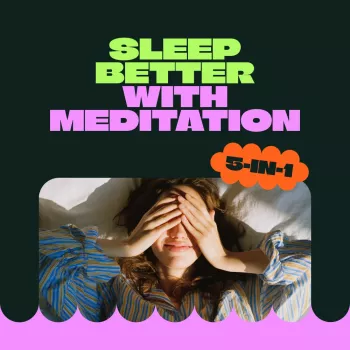
Sleep Better with Meditation Mastery Kit – 5-in-1 Bundle for Deep Restful Sleep
Falling asleep faster and staying asleep often comes down to calming the nervous system, reducing mental chatter, and building a consistent wind-down routine. A structured meditation bundle can make that routine easier to follow by pairing guided practices with clear steps to use them night after night.
When bedtime feels unpredictable—one night you’re exhausted, the next you’re wide awake—having a simple “press play” plan can reduce the friction that keeps many people stuck. A well-designed set of sleep meditations also supports the basics that matter most: a calmer body, a quieter mind, and a steady cue that tells your brain it’s safe to let go.
Why meditation can support deeper, more restful sleep
Meditation doesn’t “force” sleep, but it can create the conditions that make sleep more likely—especially when stress, rumination, or a wired nervous system is the real barrier.
- Shifts the body from stress to relaxation: Slower breathing and focused attention can nudge the nervous system toward a calmer state, easing the transition into rest.
- Gives the mind a simple anchor: Instead of replaying the day, you’re guided to return to something steady—breath, body sensations, or sound—so thoughts have less room to snowball.
- Builds consistency over time: A repeatable practice trains your brain to associate certain cues with sleep readiness, which can make bedtime feel less like a struggle.
- Works alongside sleep hygiene: Meditation pairs well with dim lighting, reduced screen time, and a stable bedtime window.
For a deeper overview of meditation’s effectiveness and safety, see the National Center for Complementary and Integrative Health (NCCIH).
What a 5-in-1 sleep meditation bundle is designed to do
A bundle format is helpful because real nights vary. Some evenings you have time for a full wind-down. Other nights you need the shortest path back to calm.
- Multiple options for real life: Different practice styles keep your routine doable on busy, stressful, or low-energy nights.
- Support for different moments of the night: Winding down, falling asleep, waking at 2–3 a.m., and getting back to sleep each benefits from a slightly different approach.
- Less decision fatigue: A clear set of choices prevents the “What should I try tonight?” spiral that can add stimulation at the worst time.
- Skill-building, not willpower: With repetition, you develop focus, body awareness, and steadier breathing—tools that tend to last beyond a single night.
For additional background on how meditation can support sleep, the Sleep Foundation’s guide to meditation for sleep is a helpful reference.
What’s included and when to use each part
Simple ways to use a 5-part sleep meditation set
| When it’s needed | Best-fit practice style | How long to use | What to focus on |
|---|---|---|---|
| 30–60 minutes before bed | Wind-down guidance | 10–20 min | Lower stimulation, slow breathing, gentle attention |
| Lights out / trying to fall asleep | Body scan or calming narration | 10–30 min | Relax jaw/shoulders, soften belly breathing |
| Racing thoughts | Attention anchor practice | 5–15 min | Breath count, single sound, or repeated phrase |
| Waking during the night | Back-to-sleep session | 5–15 min | Non-judgment, slow exhale, let thoughts pass |
| Restless body tension | Progressive relaxation | 5–15 min | Release muscle groups from feet to face |
A nightly routine that works with the kit (no complicated steps)
Who this bundle tends to fit best
Practical expectations and safe use
- Consistency matters: Meditation supports sleep for many people, but results vary; improvements often show up with regular use over multiple weeks.
- Know when to get checked: If insomnia is persistent or severe—or symptoms include loud snoring, gasping, or excessive daytime sleepiness—consider professional evaluation. The American Academy of Sleep Medicine’s insomnia resources can help you understand when to seek support.
- Don’t ignore the big disruptors: Caffeine timing, alcohol, and heavy late meals can overpower even a strong meditation routine.
- Adjust if anxiety spikes: If a practice increases anxiety, switch to a shorter session or a simpler anchor (like counting breaths), and consult a clinician if needed.
Recommended products (in stock)
- Sleep Better with Meditation Mastery Kit – 5-in-1 Bundle for Deep Restful Sleep — A structured set of guided options designed to make nightly wind-down easier to repeat and easier to personalize.
- Move Easy Live Strong – A Practical Guide to Low Impact Sports for Adults Who Want to Stay Active, Build Strength, and Protect Their Body — Gentle daytime movement can support nighttime sleep pressure and stress reduction, especially when paired with a consistent bedtime routine.
Sleep Better with Meditation Mastery Kit – 5-in-1 Bundle for Deep Restful Sleep
The Sleep Better with Meditation Mastery Kit – 5-in-1 Bundle for Deep Restful Sleep is built for nights that don’t all feel the same. Instead of relying on a single track, the bundle format supports different scenarios—falling asleep, staying asleep, and calming the mind after nighttime awakenings—while still keeping your routine straightforward.
FAQ
How often should the bedtime meditation be used to notice changes in sleep?
Daily use is a practical target, with many people noticing changes after 2–4 weeks of consistency. Start with one default session for a week, then rotate to other options as needed without overcomplicating the routine.
What if meditation makes the mind feel more active at night?
Switch to a shorter session and use a simple anchor like counting breaths on a slow exhale. Lower the volume and keep the goal as relaxation rather than trying to fall asleep quickly.
Can the kit be used if waking up in the middle of the night is the main issue?
Yes—use the brief back-to-sleep option and keep lights low to avoid fully waking the brain. Skip checking your phone and return attention to long, unforced exhales while letting thoughts pass without engagement.















Leave a comment