


Burnout Day Reset: Simple Self-Care for Mind & Body

Self-Care Strategies for Burnout Days: A Practical Reset for Mind, Body, and Balance
Burnout days can feel like running on empty—foggy thinking, heavy body, and zero margin for decisions. The most helpful self-care on those days is simple, structured, and realistic: reduce inputs, meet basic needs, and choose a few small actions that restore energy without requiring motivation. The goal is not to “fix everything,” but to stabilize today and create a gentler tomorrow.
What a burnout day can look like (and why it’s not laziness)
Burnout often shows up as a whole-system slowdown, not a character flaw. Common signs include mental fog, irritability, dread, low motivation, trouble starting tasks, and feeling overwhelmed by even small decisions. You might know what needs to be done, but your brain can’t “grip” it.
Your body can also send loud signals: headaches, tense shoulders, stomach discomfort, disrupted sleep, cravings, and a fatigue that doesn’t quickly resolve with a single night of rest. Chronic stress can affect multiple systems in the body, which is one reason burnout feels so physical (see the American Psychological Association’s overview of stress effects on the body).
Burnout tends to mix stress overload, depleted recovery time, and a reduced sense of control. Self-care works best when it lowers demand and increases safety and predictability. The World Health Organization (WHO) describes burnout as an occupational phenomenon related to chronic workplace stress that hasn’t been successfully managed.
If symptoms include panic, persistent hopelessness, or thoughts of self-harm, self-care should be paired with professional support right away.
A 3-step triage plan for the next 30 minutes
When capacity is low, the fastest relief often comes from doing less, not trying harder. Use this short triage sequence to reduce friction and stop the stress spiral.
Step 1 — Downshift (5 minutes)
Silence non-urgent notifications, dim lights, and reduce noise. Even small “threat cues” (pings, bright screens, clutter) can keep your nervous system on alert.
Step 2 — Meet basics (10 minutes)
Drink water, eat something easy (protein + carb), and use the bathroom. Physical depletion amplifies emotional overwhelm, so basics aren’t a detour—they’re the on-ramp back to steadiness.
Step 3 — Pick one tiny anchor (10–15 minutes)
Choose a single doable action: a quick shower, a 5-minute walk, or a timer to tidy one surface. The point is momentum without pressure—one completed action that tells your brain, “I can move.”
A 15-minute menu: choose 2–3 options and stop there
A menu works better than a long to-do list because it limits decisions and keeps expectations clear. Pick actions that are short, low-friction, and immediately soothing (not aspirational). If starting feels impossible, begin with the smallest version—60 seconds counts.
| Need | Pick One Option | Time | Why It Helps |
|---|---|---|---|
| Calm the mind | Box breathing (4-4-4-4) or 5 slow exhales | 2–5 min | Signals safety and reduces stress arousal |
| Support the body | Water + salty snack or simple meal | 5–10 min | Stabilizes energy and reduces irritability |
| Reduce overwhelm | Write 3 lines: “What’s heavy / What can wait / One next step” | 5 min | Creates clarity without overplanning |
| Unwind tension | Neck/shoulder stretch or legs-up-the-wall | 5–10 min | Releases muscular stress and improves circulation |
| Reset focus | Set a 10-minute timer for one task, then stop | 10 min | Builds momentum without overexertion |
| Gentle comfort | Warm shower, cozy clothing, or tidy one small area | 10–15 min | Restores a sense of control and ease |
Mind strategies: reduce input, increase reassurance
On burnout days, attention is fragile. “One-tab thinking” helps: do one small thing at a time, and close the mental (and digital) extra tabs. Multitasking raises cognitive load when your brain is already fatigued.
Replace harsh self-talk with a neutral script you can repeat without forcing optimism: “Today is a low-capacity day; small steps are enough.” This removes the extra drain of self-judgment.
Body strategies: stabilize energy before chasing productivity
If sleep has been disrupted, consider a short, timed rest (10–20 minutes) instead of a long nap that might make nighttime sleep harder. For broader stress-coping tools, the National Institute of Mental Health (NIMH) offers practical guidance.
Emotional strategies: make room for feelings without spiraling
Boundaries and recovery: a burnout-day default schedule
A practical workbook approach for repeat burnout days
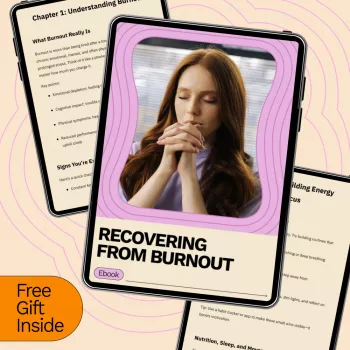
If you want a ready-to-use reset you can return to on low-capacity days, Self-Care Strategies for Burnout Days | Practical Ebook for Mind, Body & Balance is designed to support mind, body, and balance with simple routines and realistic boundaries.
When movement helps but intensity doesn’t, Move Easy Live Strong – A Practical Guide to Low Impact Sports for Adults Who Want to Stay Active, Build Strength, and Protect Their Body offers gentler ways to stay active without draining what little energy you have.
When self-care isn’t enough: signs to get extra support
FAQ
What is the best self-care to do on a burnout day?
Start with low-effort basics (water, food, rest), reduce inputs (notifications and noise), then choose 1–3 short calming actions. Avoid trying to “catch up” on everything, which usually deepens the crash.
How long does it take to recover from burnout?
Recovery depends on the cause and how long the burnout has been building, and it often takes weeks to months of reduced load plus consistent recovery habits. If symptoms are persistent, professional support can help you improve faster and more safely.
Is burnout the same as depression or anxiety?
They can overlap, but they aren’t identical: burnout is commonly tied to chronic stress and depletion, while depression and anxiety are clinical conditions with their own diagnostic criteria. If symptoms are intense, long-lasting, or scary, an evaluation is appropriate.















Leave a comment