


No-Budget Team Motivation Checklist for Managers

The “No-Cash, All-Class” Motivation Checklist: Practical Ways to Energize Teams Without Extra Budget
Motivation doesn’t have to depend on bonuses, gift cards, or expensive perks. When budgets are tight, leaders can still raise morale, strengthen accountability, and improve performance by focusing on clarity, recognition, autonomy, growth, and connection. A simple, repeatable checklist approach helps managers create momentum quickly—then sustain it through consistent, low-cost leadership habits.
Why “no-cash” motivation often works better than expected
Cash rewards can create a short spike in effort, but they rarely fix the root problems that drain energy: unclear goals, weak feedback loops, and low trust. When leaders tighten the basics—what “good” looks like, how progress is measured, and how people are treated—teams often respond faster than expected.
- Money is a multiplier, not a foundation: if the priorities are fuzzy, extra pay won’t resolve the confusion.
- Engagement rises with visibility: when expectations are specific and progress is easy to see, people feel less stuck.
- Non-monetary motivators scale: they work across departments and remote/hybrid setups because they rely on behaviors, not budgets.
- Most high-impact levers are manager-controlled: communication, prioritization, coaching, and fairness.
These ideas align well with research on autonomy, competence, and relatedness (a helpful overview is Self-Determination Theory) and what drives meaning at work (Harvard Business Review).
The checklist mindset: small leadership actions that compound
The point of a checklist isn’t to “do something big” occasionally—it’s to make motivation consistent. Small actions compound when they happen at predictable moments: start-of-week planning, 1:1s, team standups, and end-of-shift huddles. Keep each item observable and time-bound so it’s easy to repeat under pressure.
Quick checklist map: action → why it motivates → how to do it fast
| Checklist action | Why it works | Fast implementation |
|---|---|---|
| Set a clear “win” for the week | Reduces anxiety and decision fatigue | Define 1 priority outcome, 2 supporting tasks, and what “done” looks like |
| Give specific recognition | Reinforces behaviors that drive results | Name the behavior, impact, and why it matters to the team |
| Increase autonomy on the “how” | Builds ownership and initiative | Assign the outcome; let the employee propose the approach and timeline |
| Remove one blocker | Signals support and protects focus | Ask “What’s slowing you down?” then resolve or escalate within 24–48 hours |
| Create visible progress | Motivation rises when progress is tangible | Use a simple status board: Not started / In progress / Done |
| Offer micro-coaching | Skill growth boosts confidence and performance | Give one tip, one example, and one practice task for the next shift/week |
To keep the checklist honest, review results weekly using two signals: (1) team energy (what you hear in questions, tone, and initiative) and (2) output quality (rework rate, missed handoffs, customer issues, or cycle time). If energy is high but quality slips, priorities may be unclear. If quality is fine but energy drops, fairness, workload, or recognition may be off.
Core drivers of engagement leaders can influence immediately
When motivation feels low, it’s usually not a mystery—it’s one of a few core drivers that needs attention. The good news: leaders can influence them right away.
- Clarity: define roles, priorities, and decision rights to reduce friction and speed up execution.
- Competence: people stay engaged when they feel capable and supported to improve.
- Autonomy: ownership increases when employees have input on methods and sequencing.
- Relatedness: belonging grows through respectful communication and consistent follow-through.
- Fairness: motivation drops quickly when standards, workloads, or recognition feel uneven.
No-cost motivators that feel high-value to employees
“No-cost” doesn’t mean “low value.” Done well, these motivators feel personal, professional, and fair—exactly the combination that builds trust.
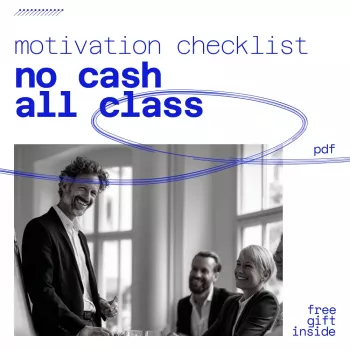
If structure would help you keep these behaviors consistent during hectic weeks, the The “No-Cash, All-Class” Motivation Checklist digital download is designed to be repeatable across 1:1s, huddles, and coaching conversations.
How to run the checklist in 10 minutes per day
As a simple “connection booster,” consider a low-cost team wellness challenge (optional, not mandatory) with a shared goal and flexible participation. If you want a ready-made resource for movement ideas, Move Easy Live Strong – A Practical Guide to Low Impact Sports for Adults can support an inclusive, low-pressure approach.
Common mistakes that make low-cost motivation backfire
A ready-to-use resource for leaders who want structure
To put the routine on autopilot, keep the The “No-Cash, All-Class” Motivation Checklist digital download where you plan your week (calendar, notebook, or shared workspace) so it’s always within reach. If your team culture includes pet-friendly conversations or community support drives, Happy Pets, Safe Play: Toy Essentials – Pet Safety Guide can be a thoughtful, practical add-on for employees who are pet owners—without turning recognition into “stuff” for everyone.
FAQ
How can managers motivate employees when raises and bonuses aren’t available?
Focus on clarity, autonomy, recognition, growth, and removing blockers. Use simple routines like weekly “wins,” brief 1:1 coaching, and visible progress tracking to keep motivation steady.
What kind of recognition works best if it’s not financial?
Specific, timely recognition that names the behavior and its impact tends to land best. Mix public praise for team-visible wins with private praise for effort, improvement, and reliability.
How fast can no-cost motivation strategies improve engagement?
Small improvements can show up within days as confusion drops and decisions move faster. Stronger trust and ownership typically build over several weeks of consistent follow-through.















Leave a comment