


Service Proposal Checklist: Scope, Pricing & Approvals

Winning Service Proposals: What to Include for Freelancers and Agencies
A strong service proposal turns a promising lead into a clear, low-friction “yes” by translating a client’s goals into scope, outcomes, timelines, and terms. The proposals that get approved fastest tend to feel easy to review: they reduce uncertainty, prevent misalignment, and make next steps unmistakable. For more guidance, see Freelance Proposal Template: 10+ Winning Examples to Land ….
Start With a Client-Ready Snapshot
Decision-makers often skim first and read later. Open with a clean snapshot that prevents confusion and signals professionalism—especially when multiple stakeholders and versions get forwarded around. For further reading, see Effective Proposal Writing For Freelancers.
- Basics up front: project title, client name, and proposal date/version.
- One-paragraph objective: what the client wants to improve and the measurable outcome (speed, revenue, leads, retention, efficiency).
- Why this approach: a short rationale tied to real constraints (budget, timeline, approvals, risk tolerance).
- Approval path: who signs, what happens after signature, and when work can start.
Keep this section tight. The goal is to remove “what is this?” friction before the reader reaches the details.
Define the Problem, Goals, and Success Metrics
Great proposals show that you understand the business problem—not just the work you’d like to do. Write the problem statement in the client’s words, then translate it into outcomes and measurements.
- Problem statement: plain language, no vendor jargon.
- Outcome-based goals: focus on what changes, not what you will do.
- Success metrics: what will be tracked, with tools, reporting cadence, and baseline assumptions.
- Dependencies and assumptions: access, assets, interviews, and legal/compliance timing.
Examples of Clear Goals and Metrics
| Goal | Metric | How It’s Measured | Timeframe |
|---|---|---|---|
| Improve lead quality | MQL-to-SQL rate | CRM pipeline stage conversions | 60–90 days |
| Reduce support burden | Ticket deflection rate | Help center analytics + ticket volume | 30–60 days |
| Increase eCommerce revenue | Conversion rate / AOV | Analytics + checkout data | 4–8 weeks |
Scope of Work: Deliverables, Boundaries, and What’s Excluded
Scope is where many good relationships go sideways—usually because “everyone assumed” something different. A client should be able to point to your proposal and answer: What exactly am I getting, and what am I not getting?
- Deliverables as outputs: specify concrete items (documents, designs, builds, workshops) and define acceptance criteria for each.
- Explicit exclusions: name common “silent add-ons” (platform migrations, ongoing content, paid media spend, stock assets, ongoing maintenance).
- Revisions vs. change requests: clarify revision rounds, review windows, and what triggers a re-quote.
- Client responsibilities: feedback turnaround times, access provisioning, content approvals, and stakeholder availability.
If you want fewer scope fights, treat exclusions as a service to the client. It prevents surprise costs and helps them plan internal resources accurately.
Approach and Process That Builds Confidence
Clients buy confidence as much as capability. A simple, phased process shows you can drive work forward without constant re-explaining.
- Phases with purpose: discovery, strategy, production, launch, optimization—each with a short “why this exists” sentence.
- Decision-making method: prioritization framework, stakeholder workshops, testing/validation, and how tradeoffs are handled.
- Communication rhythms: weekly check-ins, shared tracker, and an escalation path for blockers.
- Agency team roles: who does strategy, design, development, QA, and project management—and how handoffs work.
For a helpful reference point on managing scope and preventing misalignment, see the Project Management Institute’s overview of project scope management.
Timeline, Milestones, and a Simple Project Plan
Timelines don’t need to be complicated to be useful. What clients want is predictability: clear milestones, review gates, and dependency notes that explain what could shift dates.
- Milestone dates: include dependency notes like “starts once access is granted” or “requires content delivery by X.”
- Approval checkpoints: align with governance (marketing review, legal review, executive sign-off).
- Delay policy: explain what happens if feedback is late (timeline shifts; idle-time policy if applicable).
- Go-live/handoff: include documentation, training, and where final files live.
Milestone Template Clients Understand
| Phase | Milestone | Client Input Needed | Target Date |
|---|---|---|---|
| Discovery | Kickoff + access confirmed | Accounts, stakeholders, goals | Week 1 |
| Strategy | Plan approved | Approval on direction | Week 2 |
| Build | Draft deliverables ready | Consolidated feedback | Week 3–4 |
| Launch | Go-live | Final sign-off | Week 5 |
| Wrap | Handoff + report | Confirmation of receipt | Week 6 |
Pricing, Payment Terms, and Options
Pricing becomes easier to accept when it’s structured around outcomes and risk. Choose the model that matches how the work behaves, then make payment mechanics straightforward.
For additional proposal and sales resources geared toward small businesses, SCORE maintains a library of practical guidance and templates: SCORE.
Risk Management: Legal, Confidentiality, and Change Control
Proof and Credibility: Case Highlights and Relevant Examples
Make Approval Easy: Next Steps and Signature
A Ready-to-Use Blueprint for Faster, Cleaner Proposals
- Use a repeatable checklist to ensure every proposal covers outcomes, scope boundaries, pricing, and approvals without omissions.
- Maintain a versioned template library (fixed-fee, retainer, audit/strategy) so your structure stays steady even as deliverables change.
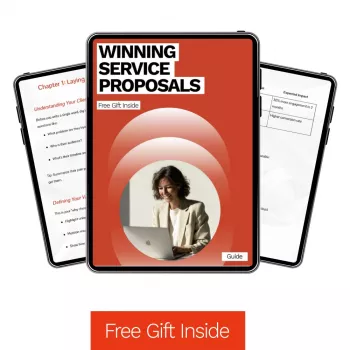
- For a fill-in framework with examples and an inclusion checklist, see: Winning Service Proposals Guide | What to Include in a Service Proposal for Freelancers & Agencies.
If you prefer practical, step-by-step digital guides for other areas as well, explore: Happy Pets, Safe Play: Toy Essentials – Pet Safety Guide and Thinning Fix: The Ultimate Digital Guide to Restoring Hair Health and Boosting Confidence.
FAQ
How long should a service proposal be?
Aim for scannable clarity: 2–6 pages for most freelance or agency projects. Put deeper details in appendices (scope notes, legal terms) so the key decisions stay easy to find.
What should be included to prevent scope creep?
Include explicit exclusions, acceptance criteria, revision limits, client responsibilities, and a change request process that states pricing and scheduling impact before extra work begins.
Should pricing be itemized or bundled?
Bundle pricing around outcomes and phases, then add limited line items only where it lowers risk or confusion—such as optional add-ons, licensing, travel, or tier upgrades.














Leave a comment